Short Answer: Heart Healthy Breakfast Ideas That Still Feel Satisfying
A heart healthy breakfast does not have to mean plain oatmeal, dry toast, or a meal that feels more like a diet plan than something worth looking forward to. Breakfast can still include creamy yogurt, warm toast, eggs, fruit, nut butter, and other familiar favorites while emphasizing foods that support cardiovascular health.
The most practical approach is to build breakfast around whole grains, fiber-rich fruits and vegetables, protein, and unsaturated fats. Oats, whole-grain bread, nuts, seeds, beans, avocado, and fruit can all provide useful nutrients, while reducing added sugar, sodium, saturated fat, and highly processed ingredients can make the meal more heart-conscious overall.
A good breakfast also needs to be realistic. A meal that takes an hour to prepare every morning is unlikely to become a regular habit for someone with a busy schedule. Overnight oats, yogurt bowls, whole-grain toast, egg scrambles, and make-ahead breakfast wraps can provide many of the same nutritional benefits with much less effort.
There is also no need to make every breakfast look the same. Some mornings may call for something warm and savory, while others suit a quick bowl of yogurt and fruit. The goal is to offer enough satisfying options that eating for heart health doesn’t feel restrictive.
This guide covers practical heart healthy breakfast ideas that use familiar ingredients, explain why they work, and show how to make common breakfast foods more supportive of a balanced eating pattern.
[wp_GAM_ADS_InPost1_shortcode]
Best Heart Healthy Breakfast Ideas
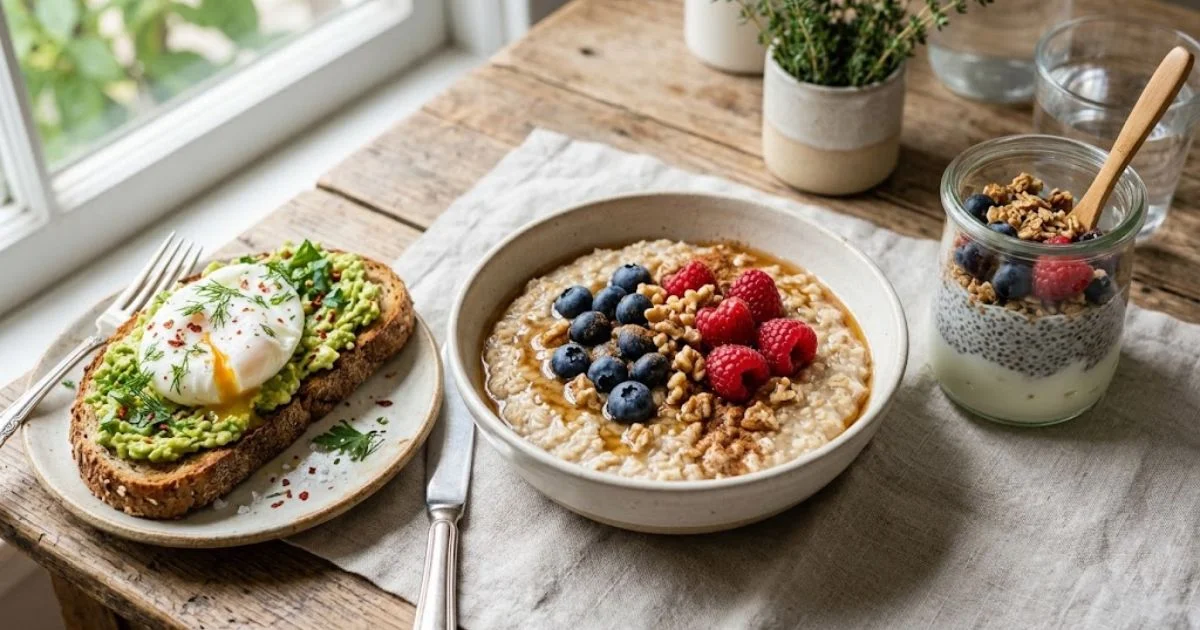
1. Warm Oatmeal With Berries And Walnuts
Oatmeal is one of the easiest breakfasts to customize without feeling like a health-food compromise. Rolled or steel-cut oats provide whole-grain carbohydrates and soluble fiber, including beta-glucan, a fiber type associated with healthier cholesterol levels.
Start with cooked oats and add blueberries, strawberries, raspberries, or sliced apple. Chopped walnuts add crunch and mostly unsaturated fat, while cinnamon adds flavor without extra sugar.
For a creamier texture, use milk or an unsweetened fortified plant beverage. Plain Greek yogurt can also be added after cooking for extra protein. A breakfast like this combines several foods that support an overall heart-conscious eating pattern without complicated preparation.
2. Avocado Toast With An Egg
Avocado toast can make a substantial breakfast when it is built around whole-grain bread and a sensible portion of avocado. Avocado is rich in predominantly monounsaturated fat, while whole-grain bread provides fiber.
Add a poached, boiled, or lightly cooked egg for protein, then finish the toast with tomatoes, black pepper, chili flakes, lemon juice, or fresh herbs. These additions bring flavor and texture without requiring large amounts of butter, cheese, or salty sauces.
3. Greek Yogurt With Fruit And Nuts
Plain Greek yogurt provides a convenient protein-rich base for a breakfast that can easily take on a dessert-like quality. Add berries, sliced peaches, kiwi, apples, or banana, then finish with walnuts, almonds, chia seeds, pumpkin seeds, or ground flaxseed.
Choosing plain yogurt makes it easier to control added sugar. Fruit provides natural sweetness, while nuts and seeds contribute texture, fiber, and unsaturated fats.
4. Vegetable And Egg Scramble
Eggs can fit into a balanced breakfast, especially when paired with vegetables and whole grains rather than making processed meat the main part of the meal.
A scramble can include spinach, mushrooms, tomatoes, onions, bell peppers, or zucchini. Serve it with whole-grain toast or beans for additional fiber and carbohydrates. Herbs, garlic, black pepper, smoked paprika, and chili add plenty of flavor without relying heavily on salt.
5. Whole-Grain Toast With Nut Butter And Banana
Whole-grain toast topped with natural peanut or almond butter and sliced banana is simple, filling, and easy to prepare. The bread provides whole-grain fiber, the nut butter adds protein and unsaturated fat, and the banana adds natural sweetness.
Look for nut butters with a short ingredient list and compare sodium and added sugar levels when choosing between products. Because nut butters are energy-dense, a moderate portion is generally enough to add flavor and nutritional value.
Easy Heart Healthy Breakfast Ideas For Busy Mornings
Overnight Oats With Apple And Cinnamon
Overnight oats are useful when breakfast needs to be ready before the morning begins. Combine rolled oats with milk or an unsweetened plant beverage, then add chopped apple, chia seeds, cinnamon, and walnuts. Refrigerate overnight, then serve cold or warm before eating.
The basic formula can be changed easily. Berries can replace apples, banana can add sweetness, and Greek yogurt can increase the protein content.
A Savory Breakfast Wrap
A whole-grain tortilla filled with scrambled egg, black beans, spinach, tomatoes, and avocado creates a more substantial breakfast without requiring a complicated recipe.
Salsa, lime juice, cilantro, chili, garlic, and smoked paprika can provide plenty of flavor. If using canned beans, drain and rinse them to reduce some of the sodium.
Chia Pudding With Berries
Prepare chia pudding the night before and keep it refrigerated until breakfast. Chia seeds absorb liquid and thicken while adding fiber and plant-based omega-3 fatty acids.
Top the pudding with berries, chopped nuts, or a small amount of plain yogurt. People who are not accustomed to high-fiber meals may find it more comfortable to increase fiber gradually.
Sweet Breakfasts That Don’t Feel Like Diet Food
Baked Apple Oatmeal
Baked oatmeal can satisfy the desire for something warm and sweet without adding much sugar. Oats, chopped apples, cinnamon, milk, nuts, and mashed banana create a naturally sweet, soft breakfast.
It can also be prepared in advance and reheated, making it useful for several mornings.
Berry And Yogurt Breakfast Bowl
A bowl of plain Greek yogurt layered with berries, oats, walnuts, and cinnamon can feel much more indulgent than its ingredients suggest. Frozen berries can work just as well as fresh fruit and are convenient to keep on hand.
If granola is added, check the nutrition label because some varieties contain considerable amounts of added sugar.
Whole-Grain French Toast With Fruit
French toast does not have to disappear from a heart-conscious breakfast. Whole-grain bread, eggs, milk, cinnamon, and vanilla can form the base, while fruit can reduce the need for heavy syrup.
Strawberries, blueberries, bananas, or warm apples can provide sweetness. A small amount of plain yogurt can add creaminess without turning the meal into a sugar-heavy breakfast.
How To Make Traditional Breakfast Foods More Heart Friendly
Choose Whole-Grain Bread
Whole-grain bread typically contains more fiber and nutrients than refined white bread. Check the ingredient list and nutrition facts rather than relying only on terms such as “multigrain,” since a multigrain product is not necessarily made primarily from whole grains.
Rethink Processed Breakfast Meats
Bacon, sausage, ham, and other processed meats can contribute significant amounts of sodium and saturated fat. They do not have to disappear completely, but replacing them more often with beans, nuts, seeds, eggs, fish, or other less processed protein sources can improve the overall nutritional balance of breakfast.
Use Fruit For Natural Sweetness
Maple syrup, honey, brown sugar, and flavored syrups can add substantial amounts of sugar when used generously. Fruit adds natural sweetness while also providing fiber, vitamins, minerals, and other beneficial nutrients.
Mashed banana works well in oatmeal and pancakes, while berries can brighten yogurt and apples can add sweetness to baked oatmeal.
[wp_GAM_ADS_InPost3_shortcode]
Heart Healthy Breakfast Ideas For Different Mornings
| Morning Situation | Breakfast Idea | Why It Works |
|---|---|---|
| Very busy morning | Overnight oats with berries and chia | Can be prepared ahead and provides whole-grain fiber |
| Craving something sweet | Greek yogurt with berries and walnuts | Creamy, filling, and naturally sweet |
| Prefer savory food | Egg and vegetable whole-grain toast | Combines protein, vegetables, and whole grains |
| Need something portable | Whole-grain toast with nut butter and banana | Quick and easy to take along |
| Using leftovers | Quinoa bowl with beans, vegetables, and avocado | Turns existing ingredients into a balanced breakfast |
| Want something warm | Oatmeal with apple, walnuts, and cinnamon | Comforting and rich in whole-grain fiber |
Foods To Limit At Breakfast
A heart-conscious eating pattern does not require treating every food containing sugar, salt, or saturated fat as forbidden. The bigger issue is how often foods high in these nutrients become the foundation of breakfast.
Sugary cereals, pastries, doughnuts, heavily processed breakfast meats, sweetened coffee drinks, and large portions of refined bread can be limited while still leaving plenty of room for enjoyable meals.
The American Heart Association emphasizes vegetables, fruits, whole grains, healthy protein sources, and unsaturated fats, while recommending limits on added sugars, sodium, saturated fats, and highly processed foods.
Can Eggs And Dairy Be Part Of A Heart Healthy Breakfast?
Eggs can be part of a balanced breakfast, especially when the rest of the meal includes vegetables, whole grains, or other nutrient-dense foods. The overall breakfast matters more than treating one ingredient as automatically good or bad.
Dairy foods can also fit into the meal. Plain yogurt and milk provide useful nutrients, while unsweetened fortified soy beverages can be an alternative for people who prefer plant-based options. Cheese can contribute protein and calcium but may also contain substantial saturated fat and sodium, so using smaller amounts can help maintain balance.
Why Whole Grains Matter At Breakfast
Whole grains contain all three parts of the grain: the bran, germ, and endosperm, while refined grains have the bran and germ removed. Oats, barley, whole-grain bread, quinoa, and other whole-grain foods can therefore provide more fiber and nutrients than their refined counterparts.
Soluble fiber is particularly relevant to cholesterol management. Oats and barley contain beta-glucan, while beans, fruit, and some seeds also provide soluble fiber. Including several of these foods throughout the day can contribute to a dietary pattern associated with cardiovascular health.
[wp_GAM_ADS_InPost5_shortcode]
How To Keep A Heart Healthy Breakfast Enjoyable
Flavor is an important part of making healthier eating sustainable. Cinnamon, vanilla, citrus zest, fresh herbs, garlic, chili, black pepper, smoked paprika, and other seasonings can make familiar foods taste very different without requiring large amounts of sugar, salt, or saturated fat.
Variety also helps. Oatmeal can be sweet one day and savory the next. Eggs can become a scramble, wrap filling, or toast topping. Beans can work in a breakfast bowl or on toast, while nuts and seeds can add crunch to yogurt, oatmeal, or fruit.
A breakfast that tastes good and fits into a normal morning is much easier to maintain than one that feels like a temporary diet.
Make Breakfast Something To Look Forward To
A heart healthy breakfast does not need to look like a restrictive diet meal. Oatmeal can be creamy and flavorful, toast can be topped with avocado and eggs, yogurt can become a satisfying fruit bowl, and savory breakfasts can include beans, vegetables, and whole grains. The most useful changes shift the overall balance toward fiber-rich foods, whole grains, unsaturated fats, and sensible protein.
Small adjustments are often easier to maintain than a complete breakfast overhaul. Keeping a few dependable ingredients available, preparing meals ahead when possible, and alternating between sweet and savory options can make heart-conscious eating feel normal rather than restrictive. A breakfast that supports cardiovascular health while still tasting genuinely good can become part of everyday life.